
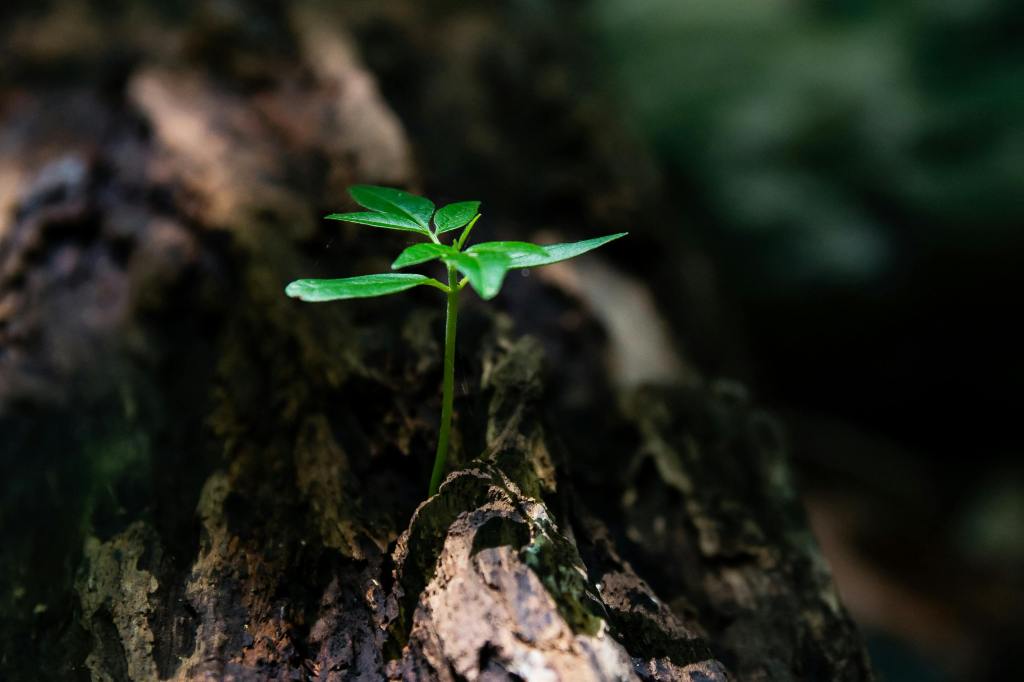
Photo: Yannick Pulver
“Ever make mistakes in life? Let’s make them birds. Yeah, they’re birds now.”
Bob Ross
If you’re anything like me, you want the product of your work to be great (some could say perfect). Today’s tip is one that has helped me with writing efficiency and speed: accepting imperfection (at least to start).
Accepting Imperfection?
What do I mean by ‘accepting imperfection’? Shouldn’t our written work be flawless? Well, yes, that is the goal. But it’s the goal for the end product. The tripping point for me, and maybe for you as well, was that I incorrectly thought the product I was working on had to be perfect at every step. While I do believe we should do everything with excellence, i.e. putting in our best effort at every opportunity, I’ve also found that a driving force of ‘perfectionism’ has limited my creative writing ability for a long time.
The first time I heard of this concept wasn’t actually about writing, it was about exam taking! I’m not sure if you’ve heard the advice of ‘if you get stuck at a question, make a note of the question, skip it and go back at the end’, but this same concept applies to unlocking your writing potential. Back when I was in school, I used to dismiss this idea thinking ‘I can’t leave a question unanswered’ but as I progressed into college and trades schools I found that this skill was extremely helpful.
Our brains do a funny thing when we stop and think about a single thing too long, they fuzz out! You would think ‘the more I focus on this one thing, the better I’ll get’ but it actually works out the other way around. The harder you try and force the solution out, the more difficult it becomes to get to the correct answer. It sounds counterintuitive, but leaving the problem alone and coming back has this annoying habit making the solution obvious.
As it Relates to Writing
How does this relate to writing? While creative writing isn’t an exam, the concept is something that I have found extremely helpful in the initial phases of rough drafts and planning. Consider it like a stream of consciousness that you allow to flow out of you. When you’re writing, just keep going! Unless it’s something really hard to understand when you go back (like a serious typo), just keep going. You can mark or flag parts where you’re not super satisfied with as you go, but don’t get too stuck trying to solve problems it in the moment.
After you’ve reached a significant milestone (the end of a major scene, the end of a chapter, etc.), take a break! Doesn’t need to be very long, just a few minutes to let your brain relax for a moment. After your mini break, go back through what you’ve written and now take the time to focus on the points you flagged from before. With a fresh mind, you’ll have an easier time to solve the answer. And, like doing an exam, often you’ll find the answer to a previous problem later on in your writing or it’ll be easier to solve now that you have an idea where you’re going.
Imperfection in Action
As an example, when I was writing the short story A Leaf for a Blacksmith, I had a concept in my mind that I wanted to explore (a blacksmith trying to overcome a problem) and I just started writing. Initially, I didn’t really know where I was going or what would happen but I just let myself imagine and write. While I was writing, I made several mistakes (poor grammar, spelling issues, repeated or redundant words) but as long as I understood what I was getting at, I just kept going.
I finished the short story in a single writing session and then I left it alone. I didn’t go back and fix it right away. In the back of my head I rolled around some questions that I was thinking about or areas I was trying to figure out, but I didn’t touch the story until the next day. With a fresh perspective I read through the short story out loud to myself and anytime something didn’t feel quite right I ran through a few different variations.
What would have taken me several days in the past as I struggled to try and figure it all out on the first pass, now only takes me two writing sessions to get the story out (with a few minor tweaks as I re-read the story a few more times, because I do try to cleanup what I can when publishing publicly, haha).
How about you, do you feel like struggle with perfectionism?
Let me know in the comments what you find works for you.
- Glen W.







 Creative Writing Wizard
Leave a comment or question