
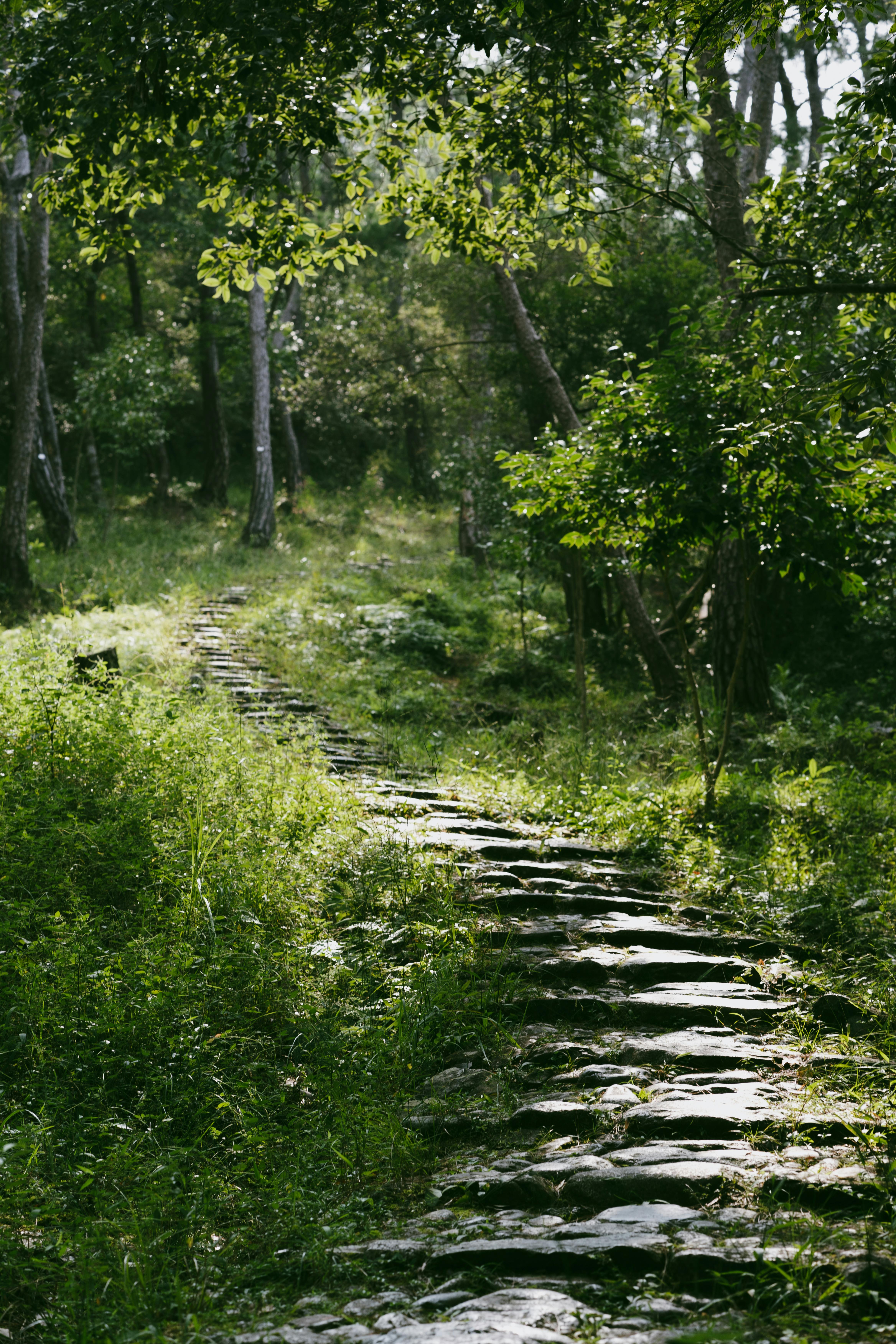
Photo: Sheldon Li
Do you have an idea of what you’d like to write, but as you delve deeper into the story you find yourself getting lost?
After a while you’re scratching your head trying to work your way out through the tangle of words, but it’s like a spiderweb of crisscrossing patterns and no clear direction.
You finally reach a point where you either plow through it and make it better, or scrap it totally and start over (which doesn’t always feel great.)
Out of all the challenges I’ve faced as a writer, this is one of the areas that had me stuck for many years. What I’ve discovered has helped me:
- Keep on a consistent story thread
- Stay free from distractions, while allowing for creative spontaneity, and
- Navigate a story with minimal downtime from getting stuck
Let me share with you how I tend to approach writing and how this can help you write your own stories.
Allow me to share an analogy to help give a picture of these methods.
Discovering the Way
Imagine that you’d like to go to a library on the other side of town. You walk out your door, get in your car, and start driving. You know roughly where you’re going, but it’s been a while since you’ve been there.
Along the way you accidentally take a few turns in the opposite direction but you find yourself passing by an ice-cream shop and hang out there for a while. After enjoying your detour, you get back in the car and you weave your way through town (at one point turning down a one-way road going the wrong way, oops!).
After a few stressful moments (and a handful of angry drivers), you find your way to a library. The path to get here took longer than you had anticipated and you had a mix of emotional experiences (from the fun of ice-cream to the stress of going the wrong way down a road) but you laugh as you think of the adventure you had to get here.
It also wasn’t the exact library you had in mind from the start, but you’re able to enjoy the library all the same even if it wasn’t exactly the place you had in mind when you set out.
A Glance Ahead
Now imagine if before leaving your house, you paused for a few minutes to confirm which library you were going to and took a glance at some of the streets.
You see along the way there’s an ice-cream shop, so you stop and then continue on your way. With just a quick glance at a few directions you had jotted down, you refreshed your memory of the way ahead and arrive at the library you were thinking of.
In both cases above, you reached your destination and, depending on the experience you want, you were able to allow for some spontaneity to have fun along the way.
But as someone who has written a number of stories like the first example, I have found that in the moments when I ‘turn the wrong way down a one-way street’ tends to be the moments that lead me to wonder if it’s worth the effort to reach my goal.
For some authors, this exploration is part of the fun. When it comes to my writing, however, I found it challenging to get lost along the way and find myself with yet another unfinished story.
Myself as Example
It’s actually a little funny, because this post you’re now reading is a perfect example. I had a vague idea of what I wanted to write, but I thought “I’ll figure it out as I get into it.”
So I sat down and started writing something, and as it grew I added details to it. But I found myself going on tangents and mixing between points to the level that I had to restart.
After almost an hour of noodling around on the keyboard, I had 700 words written but in reality it was an amalgamation of 8 different posts.
For the longest time, I used to approach my book writing this way: Just sit down and start writing something, “I’ll figure it out as I go.” And almost every time, I would get stuck, get lost, or eventually give up.
So what has helped me the most?
One of my favorite tools in the writing toolbox: Outlines!
Now before I lose the discovery writers (or ‘pantsers’), give me a few moments of your time to talk about how outlines help me and speak to the inspiration and exploration side that I often hear as the argument against outlines.
On ‘Pantsing’
Many of the people who I talk to who are adamantly against outlining tend to speak to how outlining takes the fun out of writing or being too rigid that there’s no discovery along the way.
Where I like to find balance is in the planster approach (planning and pantsing). For example this is the ‘outline’ I had for this post:
- Get lost, get stuck, give up
- This post is an example of it
- How do outlines help me
- The counter (plansters and discovery)
With just these four points, I felt a sense of direction and it helped me to stay on course.
Before I had these points, I wasn’t really sure what I was writing. I wrote in a bunch of directions as ideas popped into my head. Now, I may end up using those ideas in the future if I flesh them out a bit, but the thing that differentiated the previous attempts to write this post and this one is just four lines and a singular direction.
You’ll notice that there’s a lot of wiggle room between those points, and I didn’t plan anything about the analogy. As I was navigating between the points I thought “you know what would be helpful, is a picture” and so I followed that thread. I still kept it along the main direction that I had in mind, but I just let the idea grow and see where it went.
Another interesting thing, is that even with just that simple direction there was less ambiguity and the words just flowed out of me. In comparison to the hour or two of noodling around and 700 words of this and that in my first attempt, I was able to write this post in its first draft (roughly 1k words) in a little over 20 minutes once I had that direction.
Finding Your Way
One final note on all of the above is one of the best pieces of advice that I’ve been given and continue to pass along: Do what works for you.
I know a good deal of authors who are avid discovery writers, and I’m happy to hear people have found something that works for them! Why I’ve been focusing on this point is, I also see a good deal of new writers get stuck in the early days of writing and not making it to the end of their finished draft.
In all of my posts on this site, I share what I have found to work for me as I learn and grow as a writer. My hope is that people will see how I went from writer with many unfinished pieces to a published author, and see how people like me can finish their story.
How about you, what method do you find helps you most?
Whatever way helps you get words on the page; keep writing, and stay creative.




Leave a Reply